
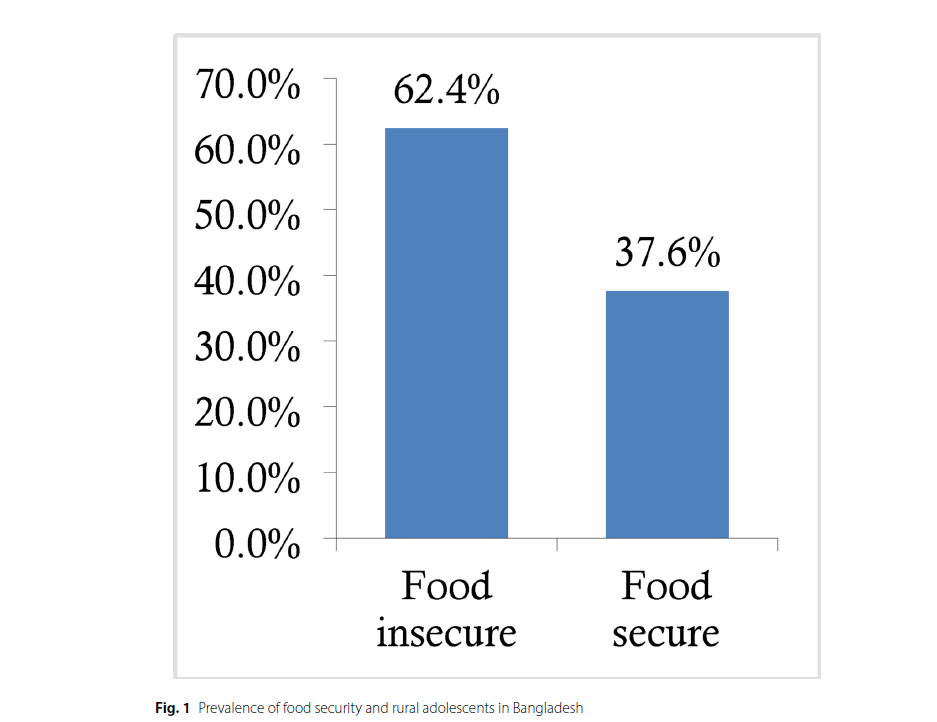
The study titled “Demographic Determinants of Food Insecurity Among Rural Adolescents (12–19 Years) in Bangladesh: A Cross-Sectional Study” by Md. Nazrul Islam et al. (2025) investigated the prevalence and key demographic factors influencing food insecurity (FI) among 529 rural adolescents in the Kurigram and Patuakhali districts of Bangladesh. Conducted between January and March 2023, the research utilized a cross-sectional design and the USDA Food Security Scale for adolescents. The findings revealed that 62.4% of adolescents were food insecure, while only 37.6% were food secure. Male adolescents were significantly less likely to be food secure compared to females (AOR = 0.46, 95% CI = 0.29–0.74). Parental education and household income were also strong predictors—adolescents whose fathers had no or limited formal education and those from low-income families (<15,000 BDT/month) were substantially more vulnerable to food insecurity. Conversely, those who perceived their household income as sufficient were over five times more likely to be food secure. The study highlights that adolescent food insecurity in rural Bangladesh is alarmingly high, surpassing rates reported in many other developing countries. The authors emphasize the need for targeted interventions such as school-based food programs, parental education initiatives, and economic support for low-income families. They recommend integrating adolescent food security into national nutrition and social safety net programs, ensuring gender-sensitive approaches, and fostering multi-sectoral collaboration among government agencies, NGOs, and private organizations. Overall, the study concludes that food insecurity affects more than half of rural adolescents in Bangladesh and calls for urgent policy action to promote equitable access to nutritious food and safeguard adolescent health and development.
মূল বিজ্ঞপ্তিটি দেখতে ক্লিক করুন...